
Key Points
Introducing the Craft World Beginner’s Guide from Enefetero! In this guest post, learn how to start playing the resource management sim where you can build, earn, trade, and more.
This guide is an overview of everything from gameplay mechanics and earning features to live-ops and player strategy.
Play Craft World here!
Angry Dynomites and their flagship game, Craft World, landed on Ronin in late July 2025. Ever since, I’ve wanted to put together a proper beginner-friendly guide. The time has finally come.
In this article, I’ll break down what Craft World is, everything you need to get started, how to understand and progress in the game, and the different earning paths currently available. If you enjoy resource games with depth and player-driven economies, this one is worth paying attention to.
A fully on-chain economy where every material and coin is owned and traded by players
Multiple earning paths: trading, community builds, liquidity, and smart production
A management game that rewards strategy and long-term thinking over blind grind
But first, some context.
For those unfamiliar with it, Craft World is a resource-management game, founded by @rev1x0, featuring dinosaur-like creatures called Dynomites.
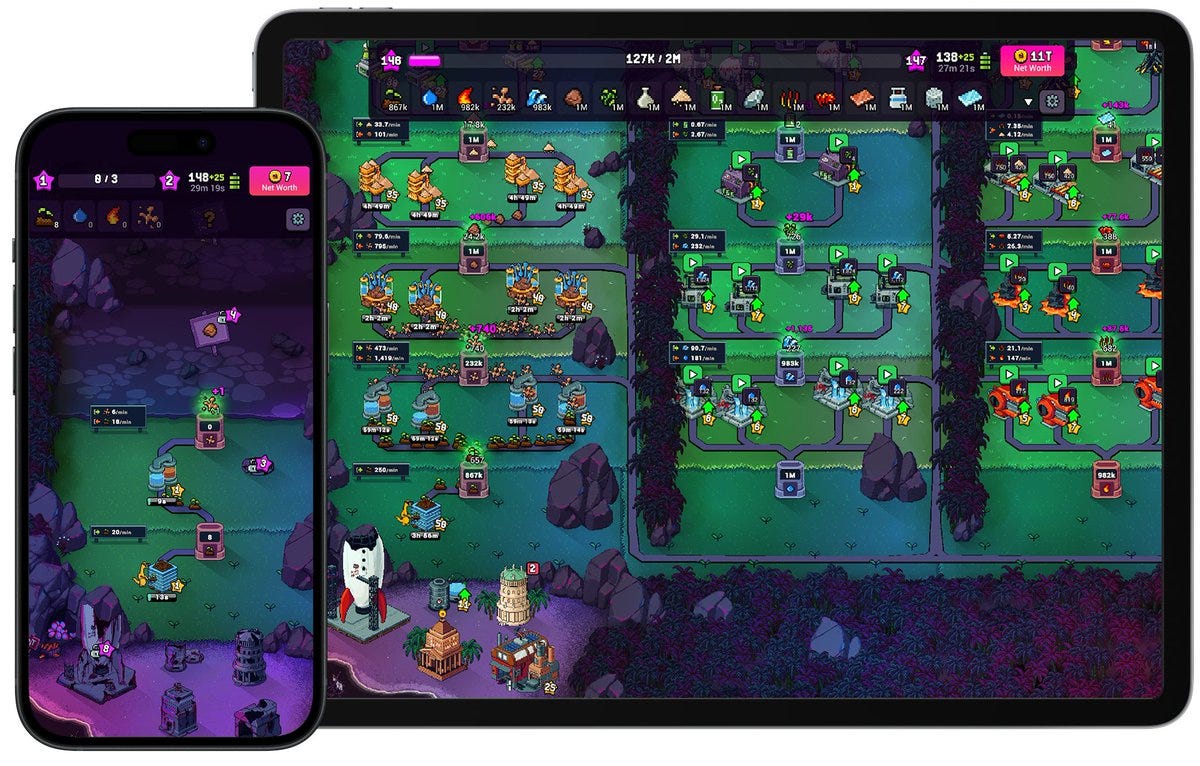
Players help these beings rebuild a devastated Earth by mining resources, crafting items, and constructing shared community “Masterpieces” (with the ultimate goal of building a rocket to escape the planet).
At its core, the gameplay loop will feel familiar to fans of the genre:
Collect → Craft → Trade → Build.
However, Craft World introduces a key twist that sets it apart: its entire economy is fully on-chain and runs on Ronin. Every material in the game (and its main currency, DynoCoin) exists on the blockchain. This unlocks a truly decentralized economy where players who understand the system can find real opportunities to their advantage.
Since its launch on Ronin, Craft World has already processed over 12 million transactions, rolled out multiple collaborations with other ecosystem games, and shipped a steady stream of updates. The game is available on both web and mobile, and you can start playing here.
The Basics
Like in most resource-management games, the early stages are simple. In Craft World, you start with a single earth mine, where your Dynomites begin extracting it to produce Mud. This is your first crafted material and your main source of experience to level up.
As you progress, you’ll gradually unlock new features, materials, and industries. Mud can be crafted into Clay. Clay into Sand. Sand into Copper. And so on, until you’re running a growing network of factories that you’ll need to upgrade in order to optimize production.
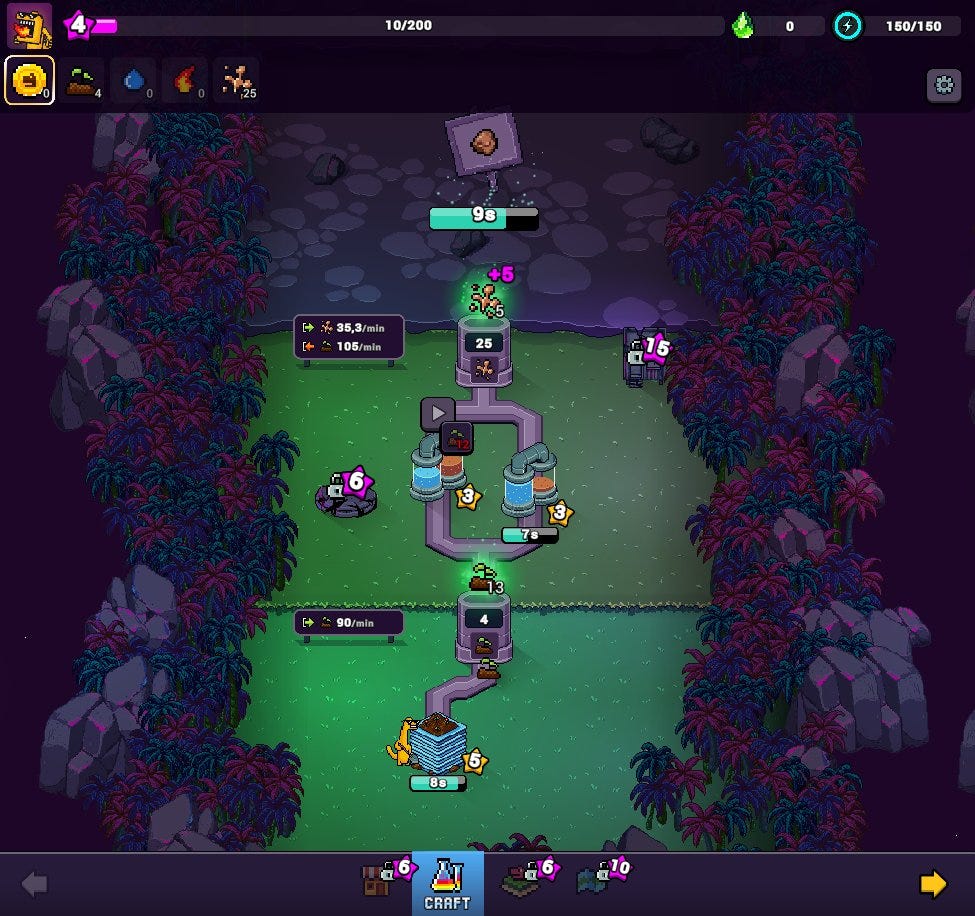
At the time of writing, Craft World features 29 different materials, crafted across four distinct land plots: one Earth plot, one Water plot, one Fire plot, and one flexible plot. This flexible plot is especially important, as it allows you to research new materials and boost efficiency by adding extra factories.
Not everything is available from the start, which makes the sense of constant progression feel genuinely rewarding. You’ll need to fine-tune your production chains to keep everything running as efficiently as possible. And, of course, there’s a catch.
Factories consume Power when crafting resources. This means you’re not only managing production chains, but also power generation and storage capacity. Balancing these systems becomes increasingly important as your operation scales.
That said, during your first 1–2 hours of gameplay, you won’t need to stress too much about it. Focus on building your production chain and reaching level 6, which unlocks one of Craft World’s core pillars: your base.
Remember: Craft World is completely free-to-play. That said, like most games, it includes optional monetization features that provide certain advantages. None of them are required to enjoy or progress in the game.
If you end up liking Craft World, the one option worth mentioning is the “No Ads Offer.” It’s a one-time purchase that permanently doubles your production speed and unlocks daily free items in the in-game shop. Fully optional, but a solid quality-of-life upgrade if you plan to stick around.
The Base
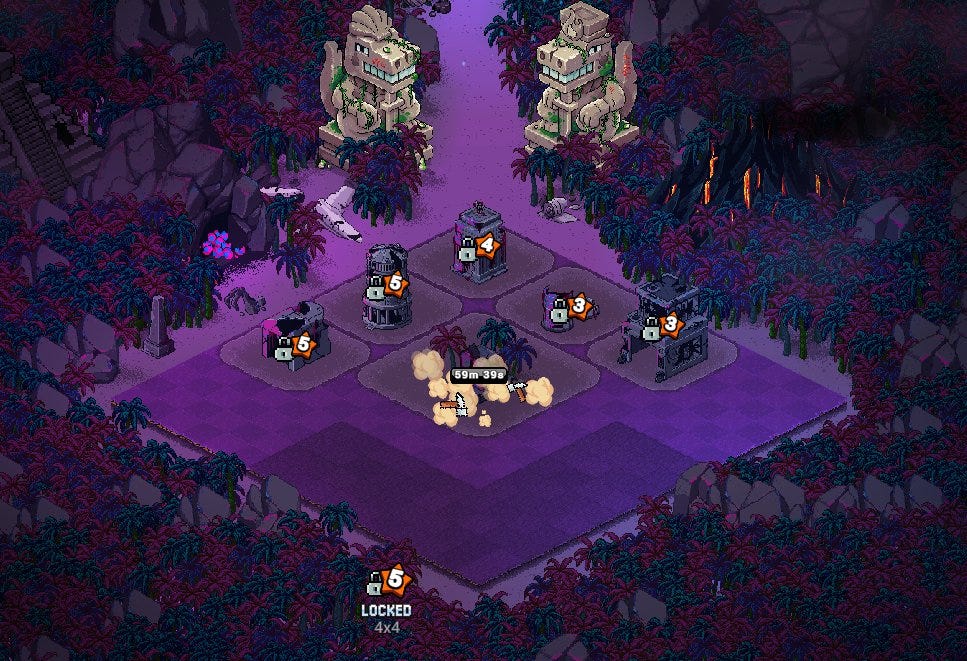
Once you reach level 6, your Dynos will discover their base. This is where you start to realize that Craft World has more depth and complexity than it initially lets on. The catch? The base is completely destroyed, and you’ll need to repair its buildings one by one.
These buildings are the backbone of progression, so let’s break down what each one does.
Town Hall
The nerve center of your colony. The Town Hall generates power, increases your maximum power storage, and unlocks both new buildings and additional base space. Upgrading it should be one of your top priorities.
As you progress, higher Town Hall levels allow you to build more power production and storage systems. And trust me, you’ll need them.
Masterpiece Building
Unlocked once your Town Hall reaches level 3, this building gives you access to Masterpieces. These are large-scale community constructions required to build a spaceship and escape the planet.
Masterpieces demand massive amounts of materials, so players contribute collectively. Your rewards depend on how much you contribute, making this a mix of long-term goals and community coordination.
Vault
As the name suggests, the Vault allows you to store Earth, Water, and Fire as the community contributes materials to active Masterpieces. The higher its level, the more it can store.
This acts as a passive way to earn the basic materials from each land plot, which becomes increasingly valuable over time.
Exchange
Once you upgrade your Town Hall to level 4, you’ll unlock what is arguably the most important building in the game: the Exchange.
Its main purpose is to trade materials for DynoCoins (and vice versa). This is where you sell excess resources, buy materials you lack, and start building your DynoCoin balance.
For example, Water and Fire cannot be produced through standard industries. Unless you own a Water Dyno NFT or a Fire Dyno NFT, the Exchange is the only way to acquire them. This makes it essential for selling Earth-based surpluses and continuing to develop your Water and Fire land plots.
Workshop
After unlocking Town Hall level 5, you gain access to the Workshop (one of the final buildings).
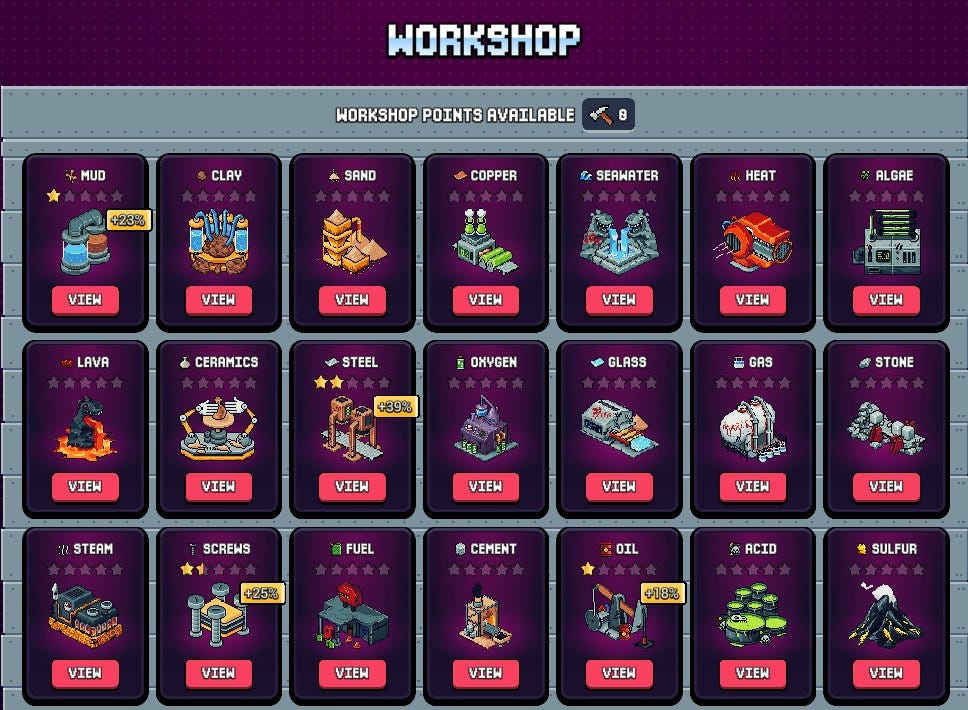
The Workshop generates Workshop Points as it levels up. These points can be permanently assigned to specific industries to increase their production speed. Because they cannot be reassigned, choosing where to allocate them requires careful thought.
My recommendation is to focus on materials you know you’ll consistently need and that usually offer solid margins on the Exchange (Steel and Screws are good examples).
Mastery Building
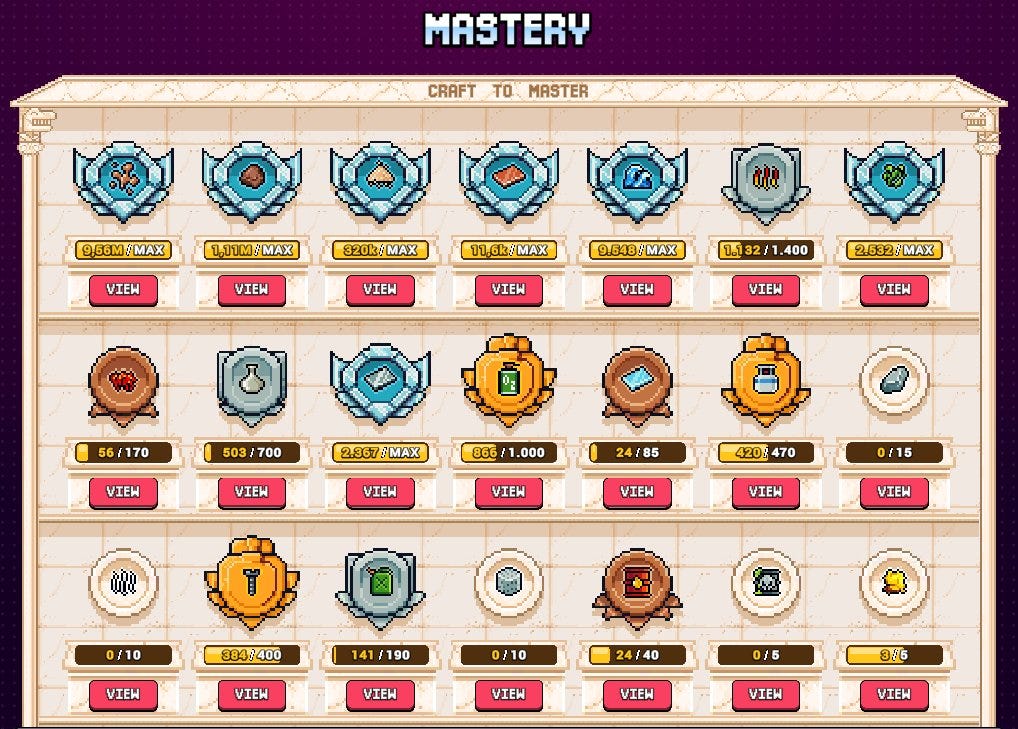
With every craft, your colony becomes more experienced in producing each material. This progress is tracked in the Mastery Building.
As you hit specific milestones for each material, its mastery level increases, making production of that material more efficient. Over time, this becomes a key factor in optimizing long-term output.
Ways to Earn
Now that you understand the basics and how Craft World’s core systems work, it’s time to focus on one of the questions you’re probably asking yourself by now: how does earning actually work in this game?
Craft World is not a traditional play-to-earn experience. There are no fixed rewards, guaranteed returns, or shortcuts. Instead, earning emerges naturally from understanding the game’s mechanics and making smart decisions over time.
Below are the main ways players currently generate value in Craft World, each rewarding a different approach, from efficient production to smarter economic decisions.
The Exchange
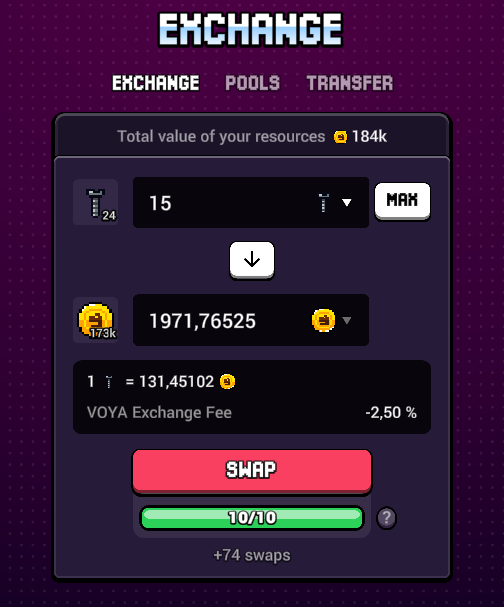
The Exchange is the most direct way to earn DynoCoins.
As your production scales, you’ll often generate more materials than you need. Selling these excess resources is the simplest form of value extraction. Beyond that, the Exchange allows players to look for profitable opportunities by understanding supply and demand.
Prices fluctuate based on player activity, updates, and Live-Ops. Buying materials when they are cheap, selling when demand spikes, or focusing on consistently high-margin resources can all be effective strategies. You don’t need to trade constantly, but paying attention to the market pays off.
The Vault
The Vault is one of the most passive earning systems in the game.
As the community contributes to active Masterpieces, the Vault gradually generates Earth, Water, and Fire. These materials can then be stored or sold on the Exchange for DynoCoins.
While it’s not the most exciting mechanic, it’s effectively free value that scales as you upgrade the Vault and as overall community activity increases.
Masterpieces
Masterpieces are large, community-driven constructions that require massive amounts of materials. Every player can contribute, and rewards scale based on the size of your contribution.
The rewards themselves are quite diverse. They range from raw materials to cosmetics such as avatars and base decorations, but can also include production boosters or free energy regeneration. This makes Masterpieces valuable not just from an economic perspective, but also from a progression and customization standpoint.
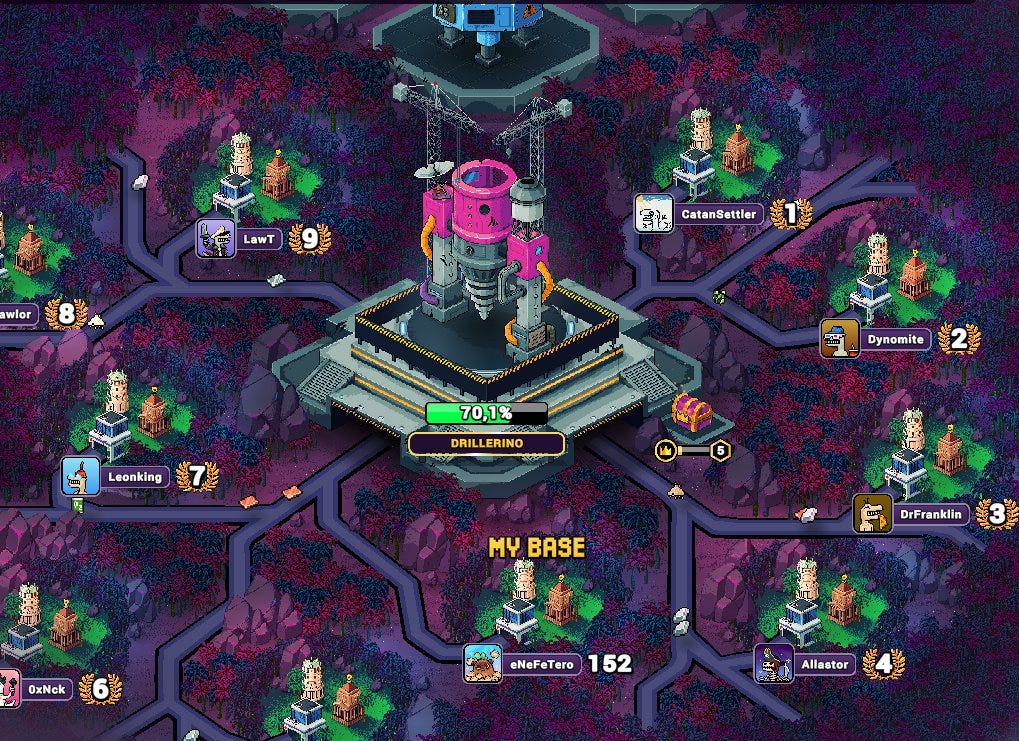
Many Masterpieces also include raffles for Water Dynos and Fire Dynos. The more you contribute, the more tickets you receive, increasing your chances of winning one. It’s a long-shot mechanic, but one that adds an extra layer of upside to active participation.
Recently, the Craft World team announced that the Exchange now applies a transaction fee. These fees are redirected back into the ecosystem by funding additional Masterpiece rewards in the form of materials and DynoCoins, further tying player trading activity to community progression.
Finally, each Masterpiece also offers an optional “Pro” path. This can be purchased to unlock access to additional rewards, but it’s entirely optional and does not prevent free players from participating in or benefiting from Masterpieces.
Live-Ops
From time to time, Craft World introduces special Live-Ops events, often in collaboration with other projects, and usually accompanied by additional rewards.
Since launch, the game has featured collaboration events with projects such as Axie Infinity, Moku, Kanstar, Ronke, Fishing Frenzy, and Rumble Arcade.
These events typically introduce limited-time land plots where players craft temporary resources and contribute to exclusive Masterpieces. Beyond the prize pools, Live-Ops often create interesting short-term trading opportunities on the Exchange due to sudden shifts in supply and demand.



The best way to stay up to date with upcoming events is by joining the game’s Discord or following Craft World on social platforms like X.
Liquidity Pools
For more advanced players, Craft World also offers Liquidity Pools.
By providing liquidity (typically pairing DynoCoins with other assets), players can earn a share of the fees generated by on-chain activity. This is a more passive and DeFi-like earning option, best suited for players who already understand the game’s economy and are comfortable locking capital for longer periods.
Completely optional, but another example of how Craft World’s on-chain design opens up alternative earning paths.
Owning Dyno NFTs
Another earning path comes from owning specific Dyno NFTs, particularly Water Dynos and Fire Dynos.
Unlike Earth resources, Water and Fire cannot be generated through standard industries. Without the corresponding NFT, the only way to obtain these materials is through the Exchange. However, owning a Water or Fire Dyno enables passive generation of its respective element over time.
This creates two clear advantages.
First, it reduces your dependency on the Exchange. Instead of constantly buying Water or Fire to sustain your production chains, you can internally supply part (or all) of your needs. This lowers operational costs and increases your margins.
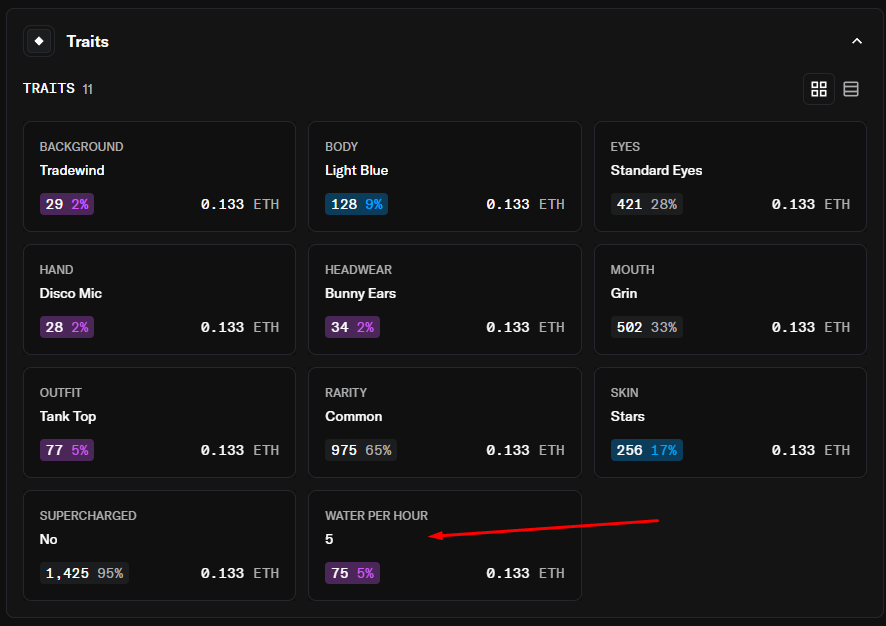
Second, it opens the door to consistent passive income. If your production doesn’t require all the Water or Fire you generate, you can sell the surplus on the Exchange for DynoCoins. During periods of high demand, this can become a particularly strong position to be in.
Of course, this method requires an upfront investment, since you need to acquire the NFT first. It’s not a free-to-start strategy. But for players who believe in the long-term growth of the ecosystem, owning a productive asset that generates scarce resources can function as both a strategic advantage and a passive earning layer.
As with everything in Craft World, it’s optional. But it’s another example of how the game blends gameplay progression with real on-chain ownership.
How to Approach Craft World
Craft World rewards a long-term mindset more than short-term optimization. The era of purely short-term farming in Web3 games is largely behind us, at least for titles that aim for long-term sustainability. While it’s tempting to focus purely on maximizing production as fast as possible, the game really shines when you start thinking in terms of efficiency, timing, and flexibility.
Not every resource is worth producing at every stage. Understanding demand on the Exchange, planning your power usage, and choosing where to specialize will have a much bigger impact than simply building more factories. In many ways, Craft World takes traditional resource management to the next level by pairing it with a fully decentralized, on-chain economy.
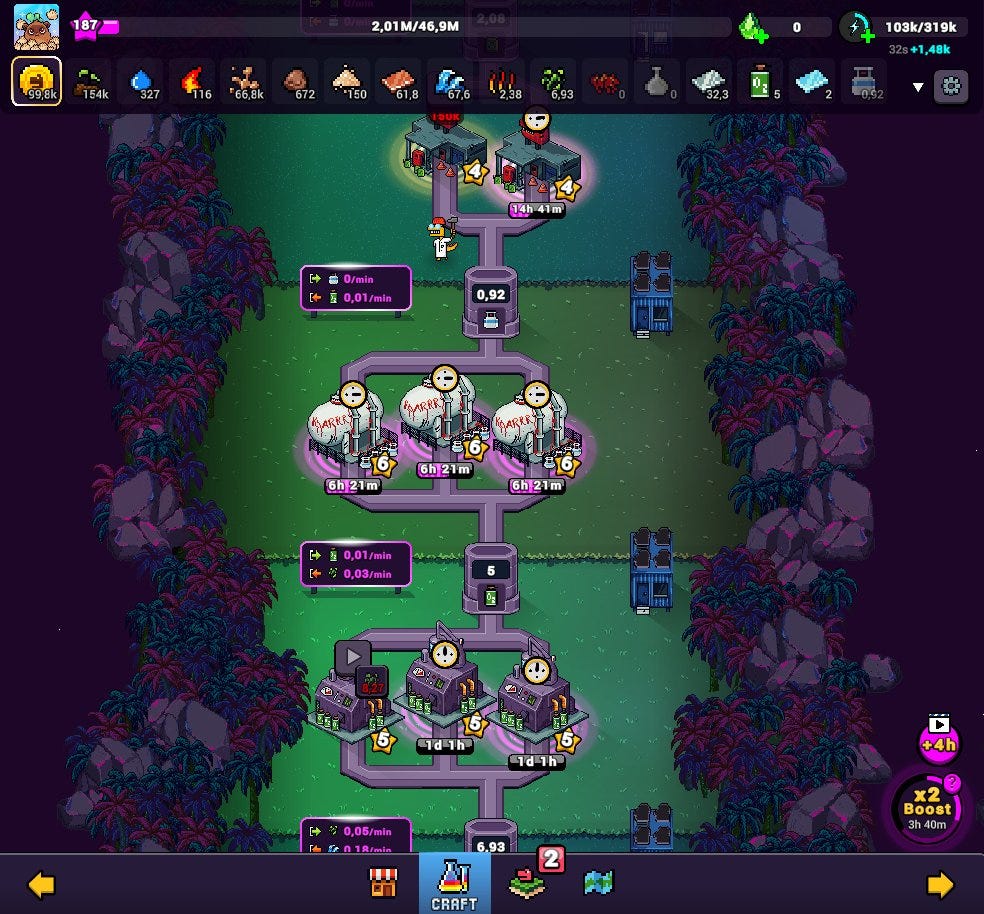
Progress in Craft World is gradual by design. Unlocks are spaced out, systems layer on top of each other, and rushing decisions (especially permanent ones like Workshop Points) can be costly. Taking the time to experiment, observe the economy, and adapt your strategy pays off.
It’s also worth noting that Craft World is very deliberate in its pacing. The game doesn’t rush you, and it doesn’t try to constantly push you toward a single “optimal” path. Instead, it gives you room to experiment, make mistakes, and gradually refine your strategy. For players who enjoy discovering systems at their own pace, that freedom becomes one of the game’s strongest points.
Final Thoughts
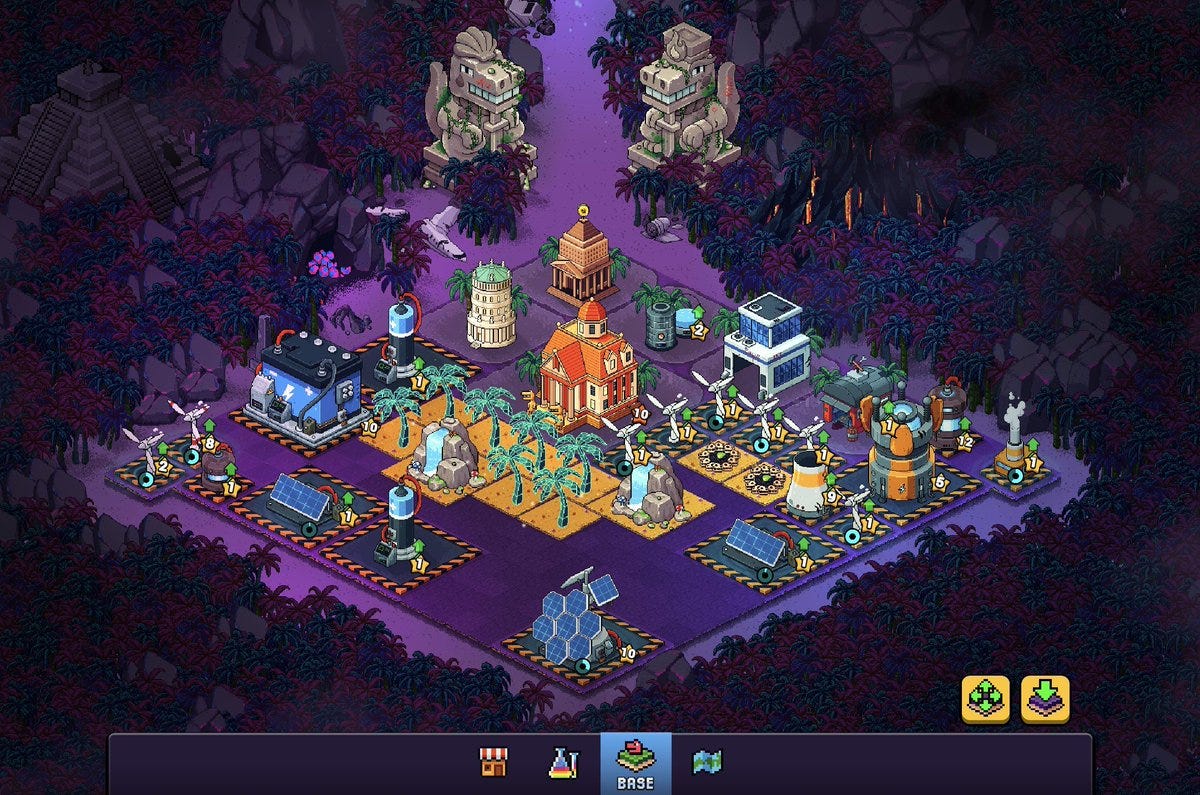
Craft World is a resource-management game first, with an on-chain economy that meaningfully enhances the experience rather than replacing it. The blockchain layer adds depth, player-driven markets, and alternative progression paths, without forcing them on you.
If you enjoy games where planning, optimization, and economic decisions matter, Craft World has a lot to offer. Whether you want a relaxed progression experience or a deeper dive into trading and optimization, the game leaves room for both.
It’s free to play, easy to get into, and steadily evolving through updates and Live-Ops. The best way to understand it, however, is still the same as with any good management game: jump in, experiment, and learn as you go.
Perfectly said